
Sculptures en Bois & Objets Artistiques
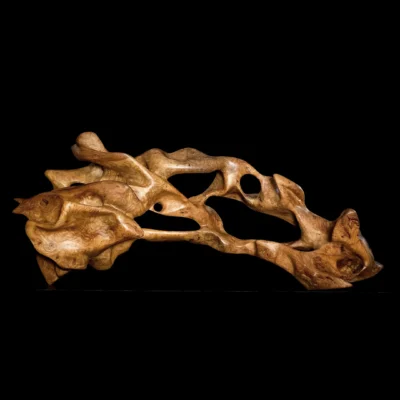
Labyrinth of Flesh
€2,300.00
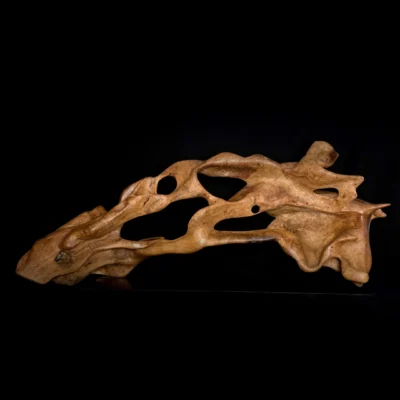
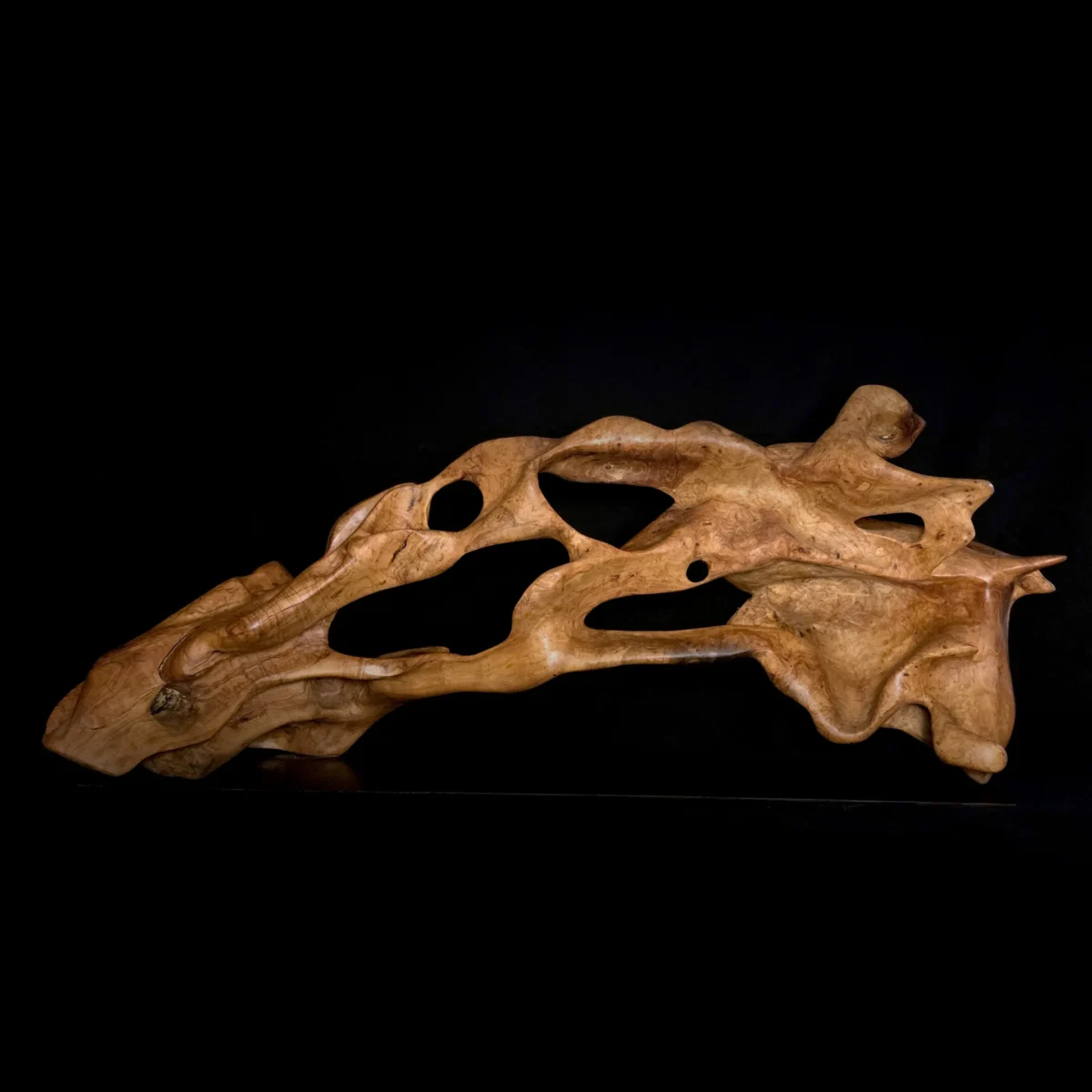
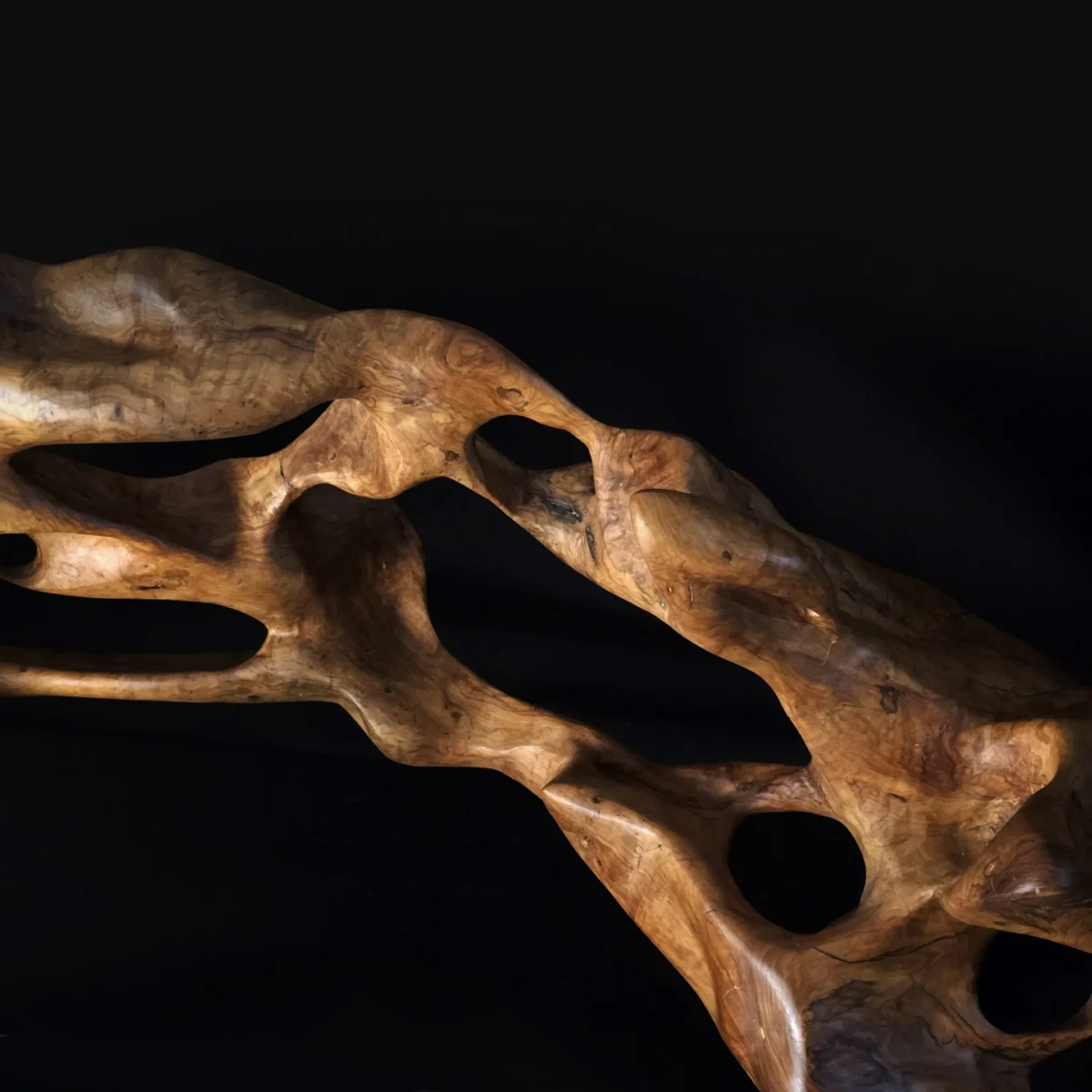
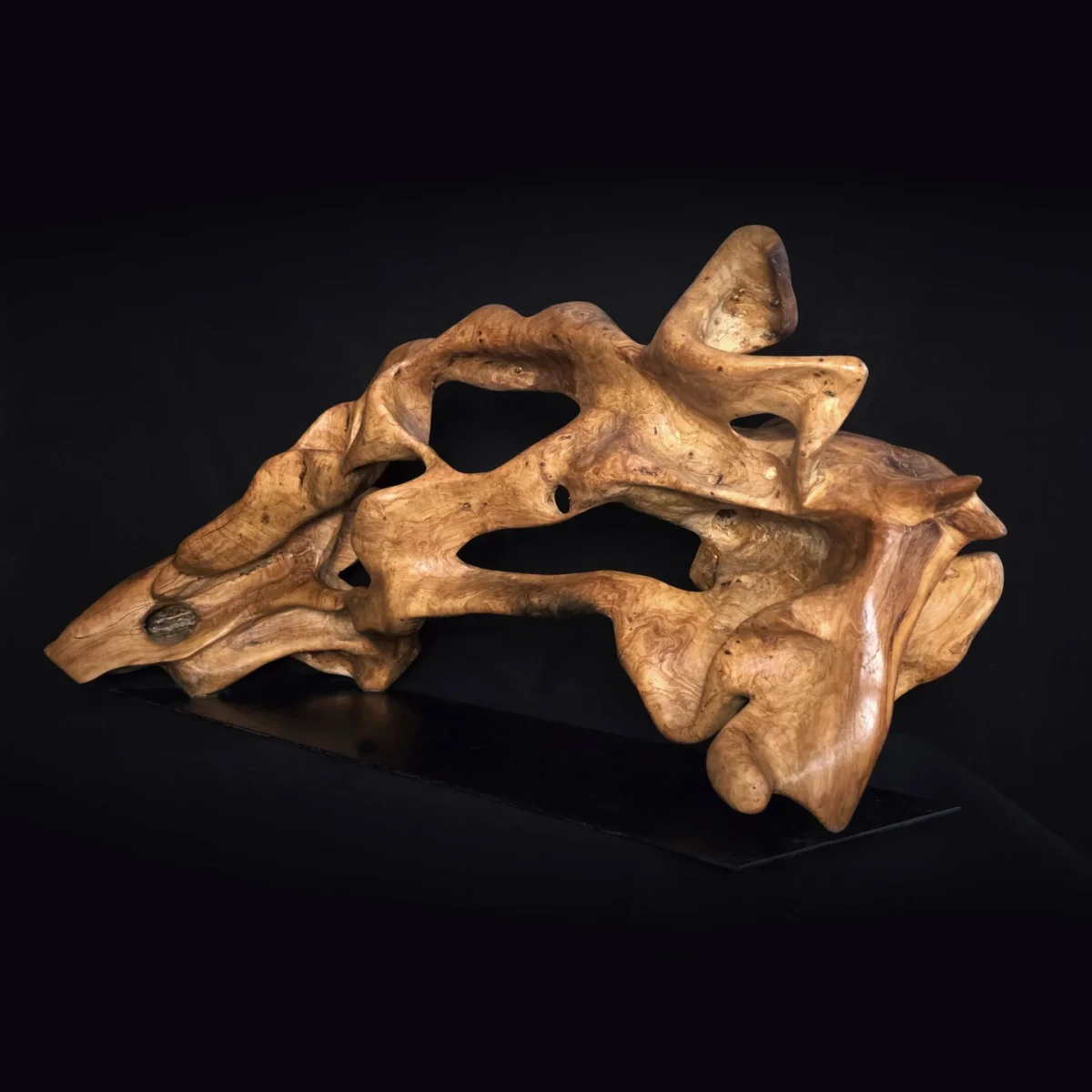
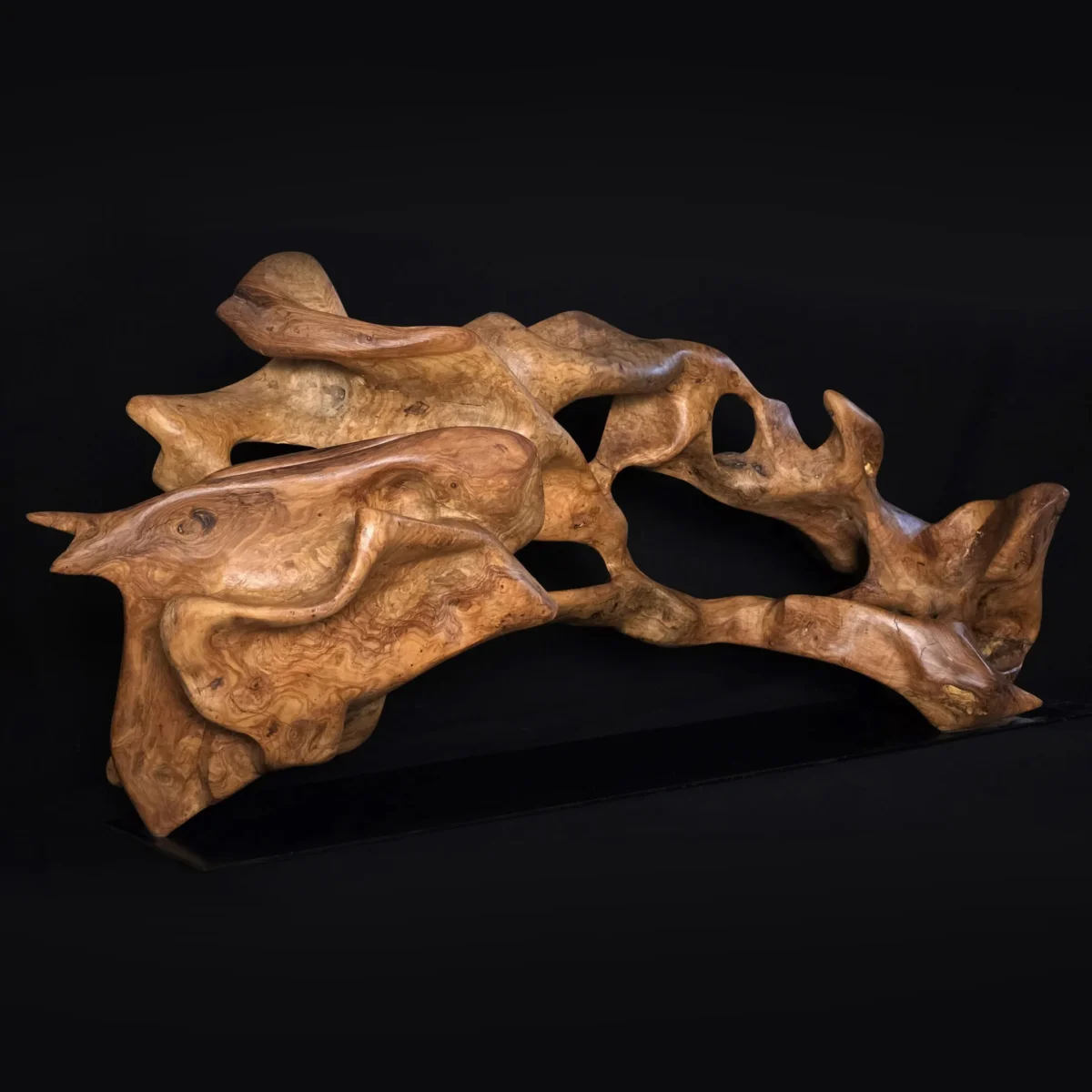
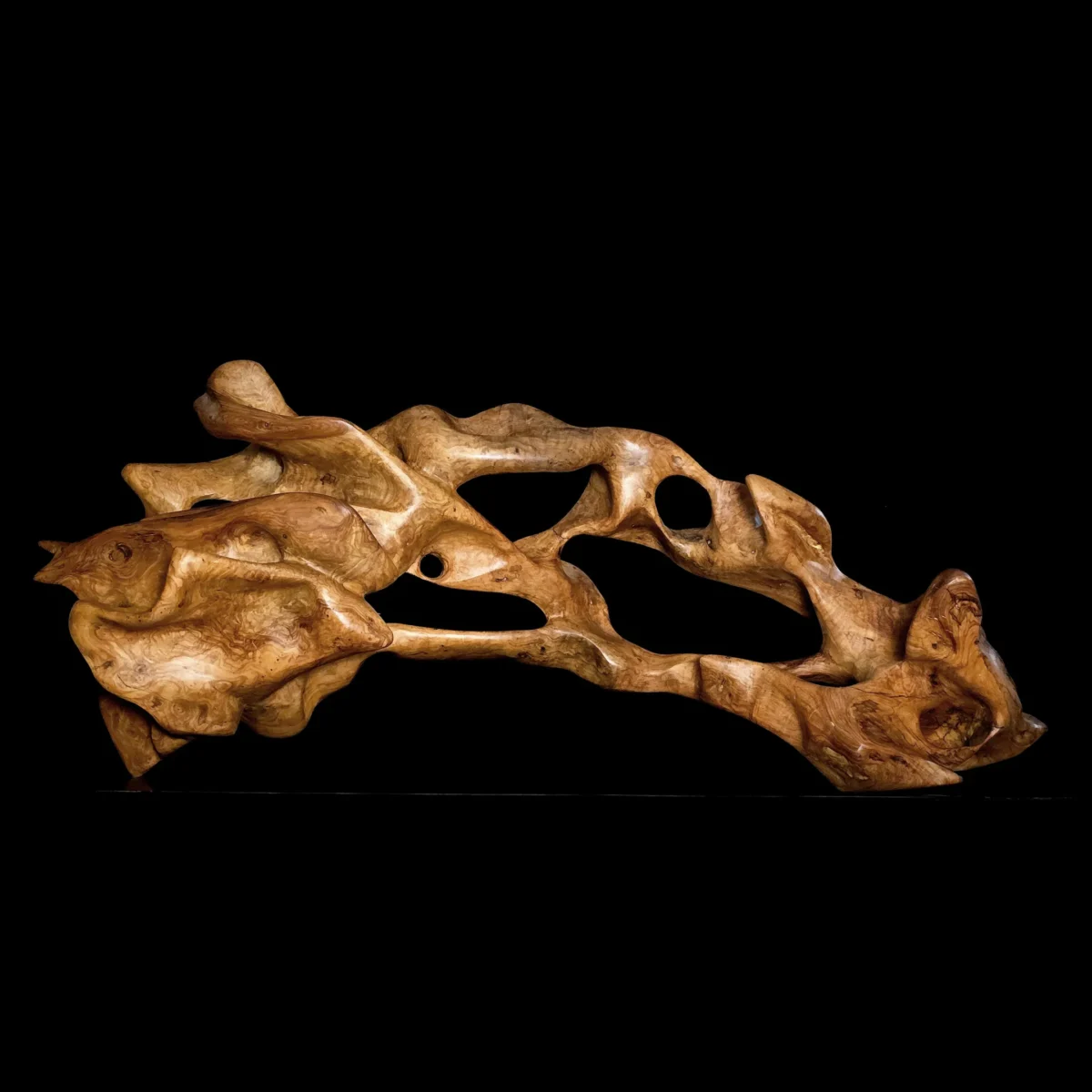
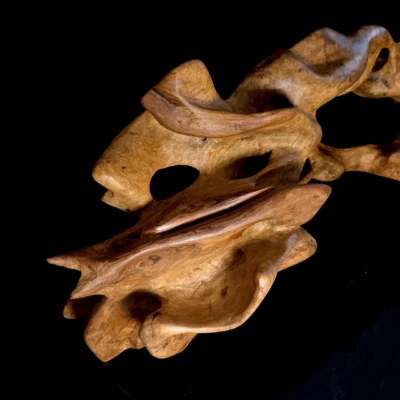
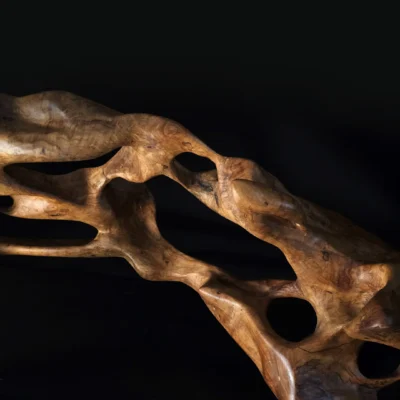
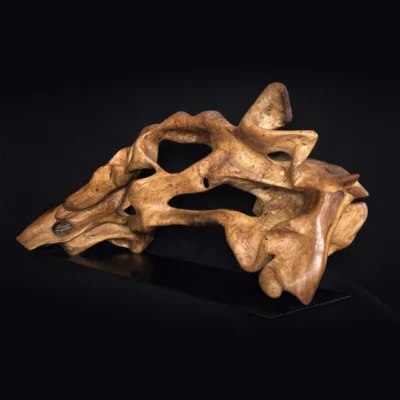
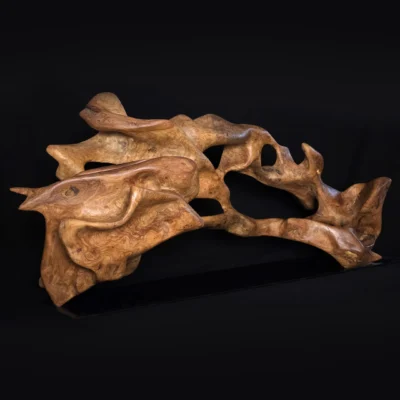
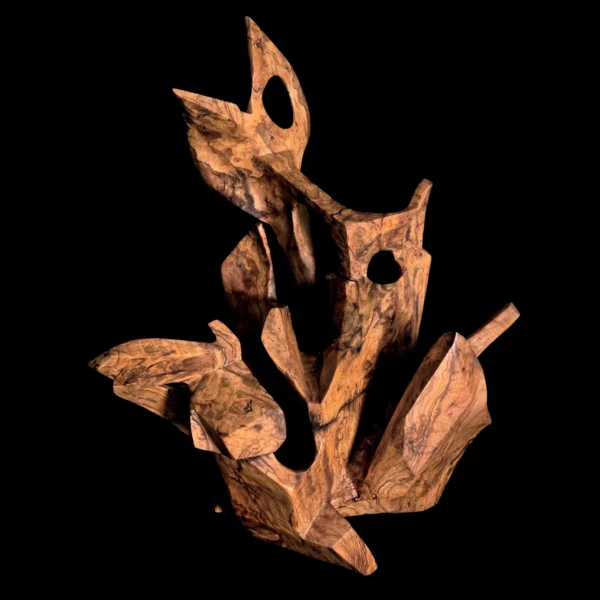
The myth of the Minotaur, translated into the language of abstract form: within the curves of an ancient olive, a body lies frozen — caught between animal strength and human proportion, never fully becoming either. The sculpture reads differently depending on the angle: from tightly gathered bull musculature to a fragile network of corridors with no way out.
Description
Bull in the Labyrinth: A Handcarved Abstract Surreal Olive Wood Sculpture
I found in the root of an old olive tree what myth had hidden for thousands of years: the body of a bull and the labyrinth that confines it — two images fused into a single, inseparable form. This handcarved abstract surreal olive wood sculpture is born from precisely that tension between strength and confinement.
Strength That Doesn’t Yet Know It’s Trapped
The massive left side is the nape, the neck, a gathering of power: smooth, flowing volumes read as heavy muscle, ready to lunge. Here the wood is dense, almost without gaps — the body doesn’t yet know it’s locked in.
Flesh Becoming a Labyrinth
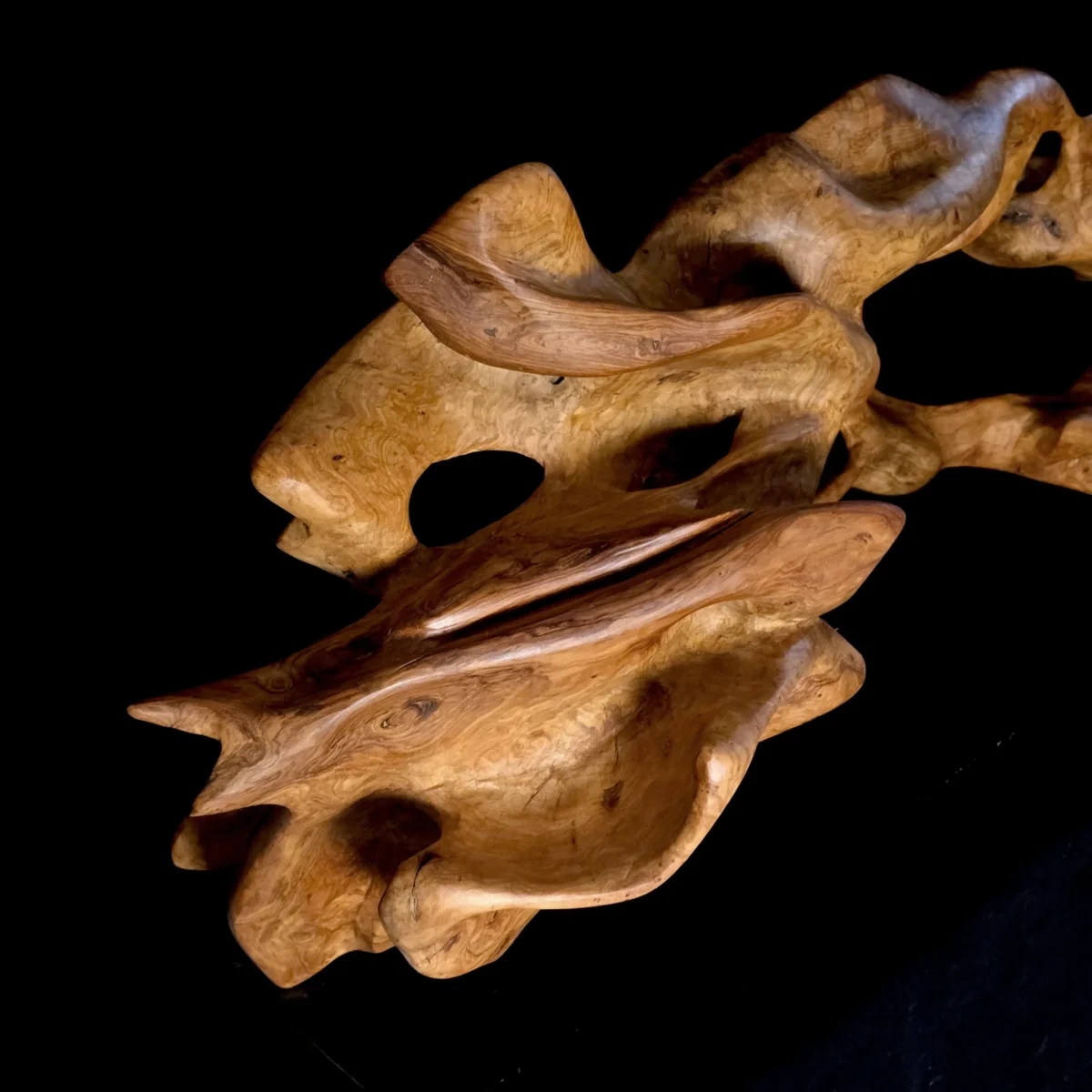
But the further the eye travels to the right, the more insistently flesh turns into labyrinth: the mass breaks into delicate, almost fragile bridges, pierced by openings that run clean through. This is no longer muscle, but the corridors and dead ends of the Palace of Knossos — built not by a mason, but by the growth of the tree itself, organic, without a single right angle, without a geometry a human mind could master.
Victory and Imprisonment as One Motion
In this transition, I see the very essence of the myth: on the outside, the bull’s strength tearing at its bonds; in truth, that same strength locked within its own corridors, doomed again and again to hit the blank wall of its own body. Victory and imprisonment are the same motion here, simply seen from different angles.
A Trace of the Fight Against Oneself
I left the dark, in places almost charred, grain on the right side of the trunk untouched — there, where the wood grew hardest, its texture holds a tension like the mark of a fight that can never be won, because the opponent is yourself.
Technical note
The handcarved abstract surreal olive wood sculpture is carved from the root of an old olive tree, preserving the wood’s natural through-holes and relief. Mounted on a metal base.
Additional information
| Weight | 18 kg |
|---|---|
| Dimensions | 45 × 110 × 42 cm |
| Material | Olive wood (Olea europaea), metal base. |
| Aesthetics | Surrealism, organic abstraction, biomorphism. |
| Technique | The sculpture is carved from the root of an old olive tree, preserving the natural through-openings and relief of the wood. Mounted on a metal base. |
Reviews (0)
Related products
-
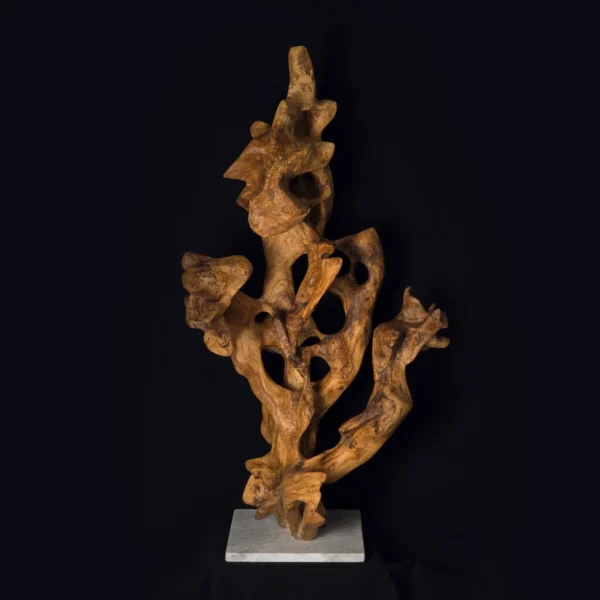
Sleepless Guardian of the Hearth
€2,800.00 -
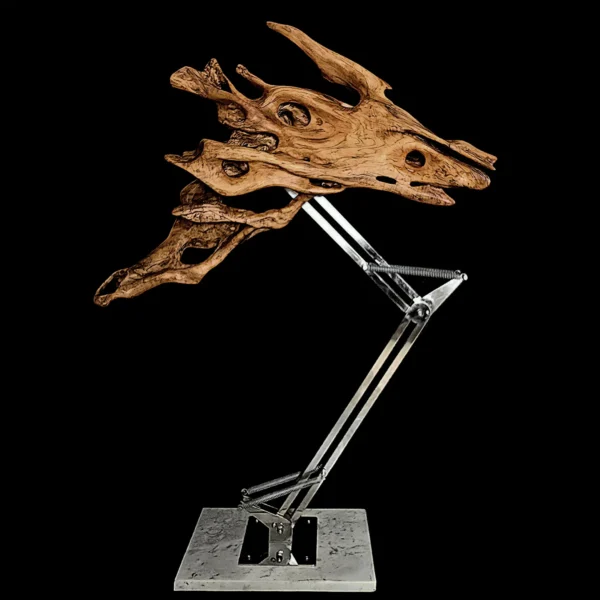
Awakening
€2,990.00 -
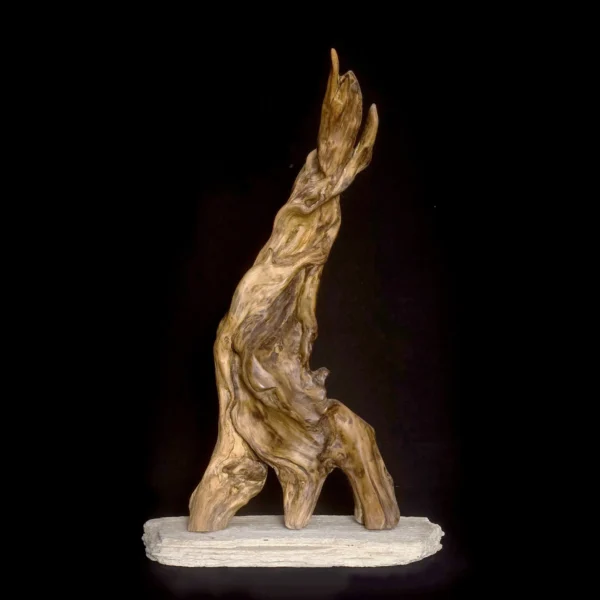
Ghost of the Belle Époque
€550.00 -
Petrified Time
€1,300.00
Reviews
There are no reviews yet.